Drive down Duveen Drive in Wyndmoor on an ordinary Tuesday and you will pass split-level houses from the 1980s, vinyl siding, plate-glass windows, the kind of street that could be anywhere in suburban Montgomery County. Then, without warning, six limestone columns rise out of somebody's side yard. They are carved with Ionic capitals. They support nothing. They have not supported anything since 1980.
Most people who drive past them regularly know they are old and probably know they came from somewhere important. Fewer people know exactly what they held up, how big that building was, or how much of it is still scattered through the streets around them. The columns on Duveen Drive are not decoration somebody's developer thought would look classy. They are the actual portico of Whitemarsh Hall, once the third-largest house built in the United States, and they are one of at least five separate pieces of it still standing in Wyndmoor today.
What Was Actually Here
Whitemarsh Hall was built for Edward T. Stotesbury, a Philadelphia banking partner at Drexel & Co. and J.P. Morgan & Co., and his second wife Eva. It took five years to build and was finished in 1921, designed by architect Horace Trumbauer, who also designed the Philadelphia Museum of Art, with gardens laid out by landscape architect Jacques Gréber. The finished house ran 283 feet wide by 100 feet deep, held roughly 147 rooms across what read as two visible stories but was actually six, three of them underground, and covered more than 100,000 square feet. By most tallies it remains the third-largest house ever built in the country, behind only Oheka Castle on Long Island, according to a history of the estate published by American Aristocracy.
The scale of daily upkeep matched the scale of the building. The grounds required a fleet of twenty motorized lawn mowers to keep them manicured, and the drive from the gatehouse to the front door ran two full miles. When the Stotesburys threw a party, and they threw them often, guests numbered six hundred or more, floodlit across the gardens. The christening ball in 1921 drew eight hundred people, including the future King Gustaf VI of Sweden and French Marshal Joseph Joffre. Henry Ford visited at some point and came away with a line that has outlived the house itself: it was, he said, "a great experience to see how the rich live."
It did not last. Stotesbury died in 1938, and Eva closed the house and moved to Florida full time. The surrounding acreage began selling off in parcels not long after, which is how ordinary postwar houses ended up built on what had been Whitemarsh Hall's outer gardens well before the mansion itself came down. The main building was sold to Pennsylvania Salt Manufacturing Company, which used it as a research facility until 1967. After that it sat empty, then decaying, then picked apart by scavengers and vandals, for more than a decade. A developer bought it in 1969 for $700,000. Township zoning changed in 1977 to permit construction on the site, and in the spring of 1980 wrecking crews finally razed what was left, clearing the ground for 163 new townhouses and single-family homes, a project that took the name Stotesbury Estates, according to a detailed account of the demolition published by photographer Cindy Pomerleau. The six columns were left standing on purpose. So was a small stone gatehouse, which somehow survived the demolition intact.
Where the Pieces Actually Are
If you know where to look, the wreckage of Whitemarsh Hall is not hidden. It is just unlabeled. Here is what is still standing in Wyndmoor, and where to find it on a walk or a drive you probably already take:
- The six portico columns on Duveen Drive, the same limestone columns that once framed the mansion's front entrance, now standing alone in a residential yard within Stotesbury Estates.
- A pair of urn-topped limestone pillars at Willow Grove Avenue and Douglas Road, each about twenty-five feet tall, marking what looks at first glance like the entrance to an ordinary subdivision street.
- Additional pillars scattered through Stotesbury Estates, off Cheltenham Avenue across from La Salle College High School, remnants of the estate's original gates and garden walls.
- A cluster of statues at the roundabout where Claridge Road meets Widener Road, salvaged pieces of the ornamental sculpture that once lined the formal gardens.
- The original gatehouse, one of the only complete structures from the estate to survive the 1980 demolition, still standing on what was once the two-mile approach to the front door.
None of these come with a plaque. There is no marker telling you what you are looking at. The only way to know is to already know, which is exactly why most people who drive past them every week have never connected the dots.
The Street Names Are a Guest List
Once you start looking for Whitemarsh Hall in the physical remnants, the street signs start giving away the rest of the story. Duveen Drive is named for Joseph Duveen, the art dealer who filled the mansion's rooms with antiques sourced from England and France. Trumbauer Drive carries the architect's name. Stotesbury Avenue and Cromwell Road round out a short list of streets that, taken together, read less like a typical developer's naming convention and more like a cast list for a house that no longer exists. According to Wikipedia's entry on Wyndmoor, the mansion's columns and statuary survive in the neighborhoods that replaced it, and two structures connected to the estate, the Stotesbury Club House and the John Welsh House, are listed on the National Register of Historic Places. The street grid is doing the same job as a historical marker would, just without the sign.
A Wartime Detail Most Neighbors Don't Know
One more piece of the story rarely comes up, even among people who know the columns. During the Second World War, with fears that German U-boats or warships could reach New York, the Metropolitan Museum of Art moved a portion of its collection out of Manhattan for safekeeping. Whitemarsh Hall, sitting empty and secure well inland, was used to warehouse the bulk of those treasures for the duration of the war, according to Pomerleau's account of the estate's history. For a few years, some of the most valuable art in the country sat in storage inside a Wyndmoor mansion most of its own neighbors never got to see the inside of, and few residents today know it happened at all.
Why This Matters More Than It Seems To
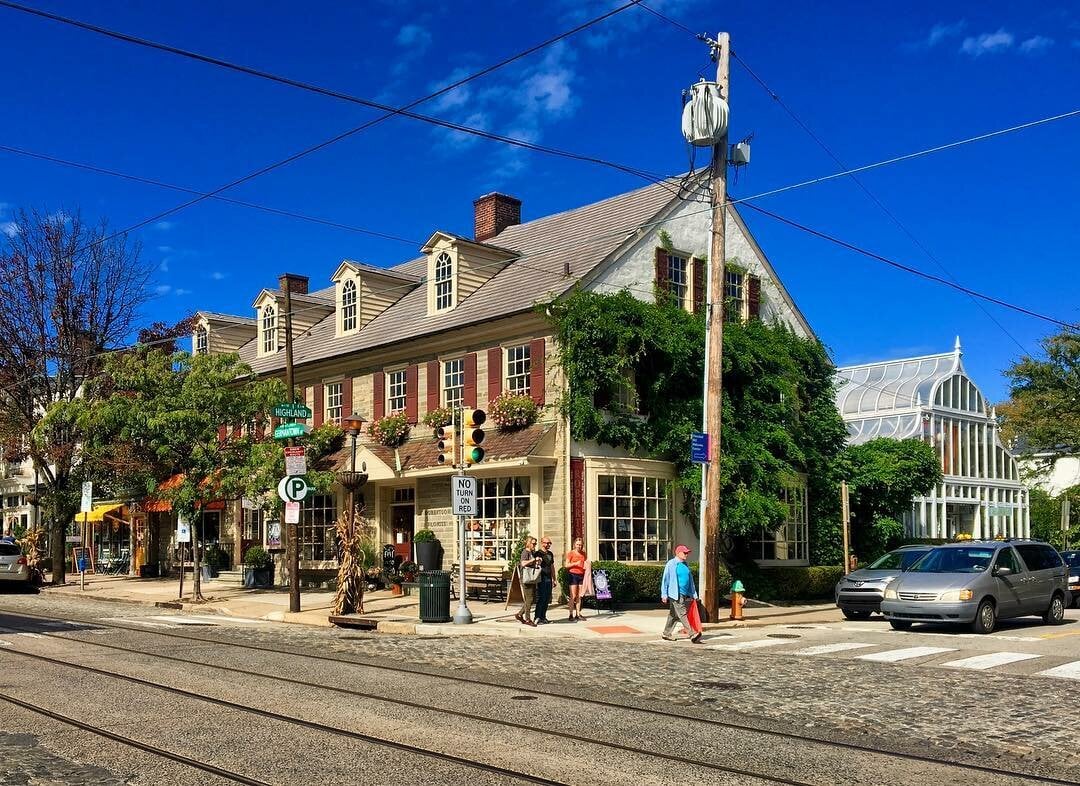
None of this changes anything about property lines or school boundaries or what a house on Duveen Drive is worth. What it does is give you a different way to read a place you already know. Wyndmoor looks, on the surface, like a fairly ordinary Montgomery County suburb: quiet streets, a small commercial cluster near Willow Grove Avenue and Mermaid Lane, easy access into Chestnut Hill and the Wissahickon Valley Park trail system for anyone who wants a longer walk. That surface reading is not wrong. It is just incomplete. Underneath the 1980s housing stock is the literal footprint of one of the most expensive private homes ever built in America, and pieces of it are still standing exactly where they fell, or were deliberately left, forty-six years ago.
If you live near Duveen Drive, or drive past the Willow Grove Avenue pillars on your way to Rita's or Captain Andy's Market, the next time you make that same trip, take the extra ninety seconds. Look at what the columns are actually holding up, which is nothing, and consider what they used to.
At The Sivel Group, we spend as much time learning the history under a neighborhood's streets as we do tracking what is happening on top of them, because the two are rarely unrelated. If you are curious about what else is hiding in plain sight around Chestnut Hill, the Main Line, or Wyndmoor, we would be glad to talk it through. SELL SMARTER. BUY SMARTER. MOVE SMARTER.