Selling a condo in Center City can feel simple at first, until you realize buyers are judging more than your unit alone. They are comparing your building, your monthly fees, your documents, your photos, and your timing, often all at once. If you want a smoother sale and a stronger result, it helps to prepare early and plan strategically. Let’s dive in.
Know the Center City market
Center City is not one single condo market. Recent listing data across nearby submarkets range from about $263,000 in Center City West to $700,000 in Society Hill, so broad neighborhood averages only tell part of the story. For most sellers, the most useful pricing clues come from your building first, then from nearby buildings with similar amenities, fees, age, and views.
Current conditions also suggest that precision matters. Redfin’s March 2026 data shows a median sale price of $474,500 and 108 days on market for Center City, and the area is described as not very competitive. In a market like this, strong presentation and accurate pricing can make a meaningful difference.
Start your sale early
If you hope to sell in spring, your real work should begin in winter or early spring. Redfin’s 2026 timing guidance points to mid-May as Philadelphia’s best time to sell, with late March through mid-May generally being a strong listing window. That means sellers often benefit from getting repairs, staging, paperwork, and pricing strategy lined up well before launch.
Waiting until listing week can create avoidable stress. Condo sales often involve both unit prep and association documents, and those timelines do not always move as quickly as you want. Starting early gives you more control over the process and more flexibility if something needs attention.
Prepare the unit buyers will see
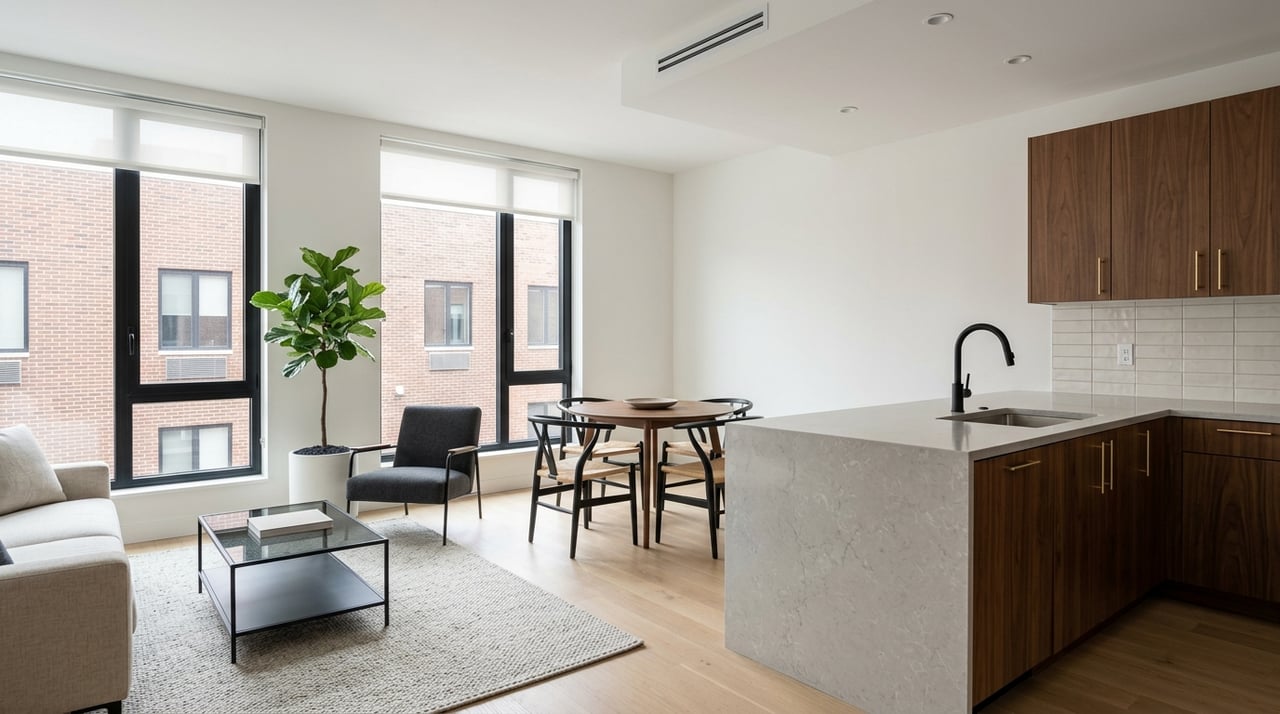
Buyers tend to notice condition, cleanliness, and layout first. Redfin’s spring selling guidance recommends decluttering, removing personal items, clearing closets, making small repairs, and improving lighting. These simple updates can help your space feel larger, brighter, and easier for buyers to picture as their own.
For many Center City condos, the key rooms to focus on are the living room, primary bedroom, and kitchen. Those spaces often shape the emotional first impression. A clean, edited look usually performs better than a room that feels crowded or overly personalized.
Staging can also help support value. NAR’s 2025 staging research found that staging made it easier for 83% of buyers’ agents to visualize a property as a future home, and 29% of agents said staging increased the dollar value offered by 1% to 10%. In a condo listing, that visual impact matters even more because your first showing often happens online.
Remember the building matters too
With a condo, buyers are not only purchasing your interior space. They are also evaluating the building experience and the association itself. That means the lobby, hallways, elevators, lighting, package area, and overall arrival can all shape perceived value.
This matters for practical reasons, not just cosmetic ones. Pennsylvania condo resale rules require buyers to review building-level documents covering items like reserves, insurance, lawsuits, and other association facts. As buyers assess those details, the condition and feel of the common areas can reinforce or weaken confidence in the purchase.
Order condo documents early
One of the smartest steps you can take is ordering your condo resale documents as soon as selling becomes a real possibility. Under Pennsylvania’s Uniform Condominium Act, the association must provide a resale certificate within ten days after a request. That certificate includes important details buyers will want to review before moving forward comfortably.
The law requires sellers to provide the declaration, bylaws, rules or regulations, and a certificate disclosing monthly common expense assessments, unpaid assessments, other fees, proposed capital expenditures, reserve amounts, financial statements, judgments, pending suits, insurance coverage, known violations, and other association facts. Because the contract remains voidable until the certificate has been delivered and for five days afterward, document timing can directly affect the transaction.
Early ordering helps in two ways. First, it reduces the chance of a delay once you are under contract. Second, it gives you time to understand what buyers will see and prepare for questions before they arise.
Understand fees and closing costs
When you plan your net proceeds, it is important to look beyond the sale price alone. Philadelphia’s realty transfer tax totals 4.578%, made up of 3.578% city tax plus 1% Commonwealth tax. It is usually split evenly between buyer and seller, though the city can collect 100% from either party.
You should also account for association-related charges. Pennsylvania law allows associations to charge reasonable fees for preparing resale certificates and, in limited cases, capital improvement fees, but no other resale-transfer fees. Those costs may not be the largest line items in your closing statement, but they should still be part of your planning from the start.
Complete seller disclosures carefully
Pennsylvania’s seller disclosure law requires a signed property disclosure statement before an agreement of transfer is signed. The form includes condominiums and homeowners associations among the topics that must be addressed. For condo resales, the seller disclosure law applies to your own unit, while common-element disclosures are governed by the condominium statute.
The law does not require you to perform a special investigation. Still, known material defects should not be omitted. A careful, accurate disclosure process can help build trust with buyers and reduce the risk of problems later.
Price beyond square footage
A condo should be priced against more than its finishes and size. Buyers often compare monthly condo fees, parking, storage, and any pending assessments because those factors affect total monthly ownership cost. Two units with similar square footage can feel very different in value once those items are considered.
That is why building-level comps matter so much in Center City. The best pricing strategy usually starts with recent sales in the same building, then expands to nearby properties with a similar fee structure, amenity package, age, and view orientation. In a softer market, overpricing can cost you time and leverage.
Invest in launch-quality marketing
Most buyers begin their search online, so your listing has to perform on screen before it can perform in person. NAR reports that 52% of buyers found the home they purchased online, and 81% rated listing photos as the most useful feature during their search. Strong visuals are not optional in a condo sale.
That means professional photography should be part of your baseline strategy. NAR’s staging research also found that buyers and agents place high importance on photos, physical staging, videos, and virtual tours. For a Center City condo, a strong first photo, bright and polished imagery, and a clear floor plan can help generate attention in the critical first few days.
At The Sivel Group, presentation is treated as part of the sales strategy, not an afterthought. For sellers in Center City, that approach supports the kind of polished launch that helps a property stand out in a more negotiable market.
Build a simple condo sale checklist
If you want a cleaner path to market, focus on the steps that make the biggest difference:
- Review recent building and nearby condo comps
- Plan your ideal listing window well in advance
- Declutter, depersonalize, and complete small repairs
- Improve lighting and refresh the unit’s presentation
- Ask about staging for key rooms
- Check the appearance of common areas you pass through daily
- Order condo documents and resale certificate early
- Gather information on fees, reserves, assessments, and insurance
- Complete your seller disclosure carefully
- Estimate transfer tax and association-related closing costs
- Prepare professional photography and marketing before launch
A successful Center City condo sale usually comes down to preparation, pricing, and presentation. When those three pieces work together, you are in a much better position to attract serious buyers and move forward with confidence. If you are thinking about selling and want a plan tailored to your building, timing, and goals, connect with Michael Sivel.
FAQs
When should you order condo documents for a Center City condo sale?
- You should order them as soon as your decision to sell becomes serious because the association has ten days to provide the resale certificate, and the contract stays voidable until the certificate is delivered and five days pass.
What documents are required for a Pennsylvania condo resale?
- Sellers must provide the declaration, bylaws, rules or regulations, and a resale certificate covering items such as monthly assessments, unpaid assessments, reserve amounts, financial statements, insurance coverage, pending suits, and known violations.
What costs should sellers expect in a Philadelphia condo sale?
- Sellers should plan for Philadelphia realty transfer tax, which totals 4.578% and is often split evenly with the buyer, plus any association resale certificate fees and any allowed capital improvement fees.
What matters most when pricing a Center City condo?
- The most relevant factors are same-building or very similar nearby comps, monthly condo fees, parking, storage, amenities, building age, view orientation, and any pending assessments that affect total ownership cost.
What rooms should you stage before listing a Center City condo?
- The living room, primary bedroom, and kitchen are the rooms most often emphasized because they strongly influence buyer perception in photos and showings.